
Water access is one of the four criteria in the site readiness gap, and it is the one many site selectors verify last. Power, fiber and zoning have established research workflows while water tends to be treated as a confirmatory step rather than a primary screen.
That sequencing is where data center water rights can become a problem. In many markets, municipal capacity is ample and the screen is genuinely straightforward. In constrained markets, a late discovery is among the most expensive outcomes a project can produce. Acres.com surfaces parcel-level water access context alongside the other readiness criteria from the start.
Why Have Data Center Water Rights Become a Critical Path Item?
Data center water rights matter because cooling demand scales with load. Berkeley Lab measured U.S. data center electricity use at 176 terawatt-hours in 2023, about 4.4 percent of national consumption. The 2028 range runs from 325 to 580 terawatt-hours.
The water question that follows is not how much a facility withdraws, but how much it consumes. The U.S. Geological Survey (USGS) draws that distinction clearly in its thermoelectric power water use research.
In 2020, USGS reported that thermoelectric plants in the lower 48 states withdrew about 59,889 million gallons per day of freshwater in 2020. They consumed about 3.9 percent of it, or roughly 2,359 million gallons per day. Surface water supplied 99.6 percent of those withdrawals.
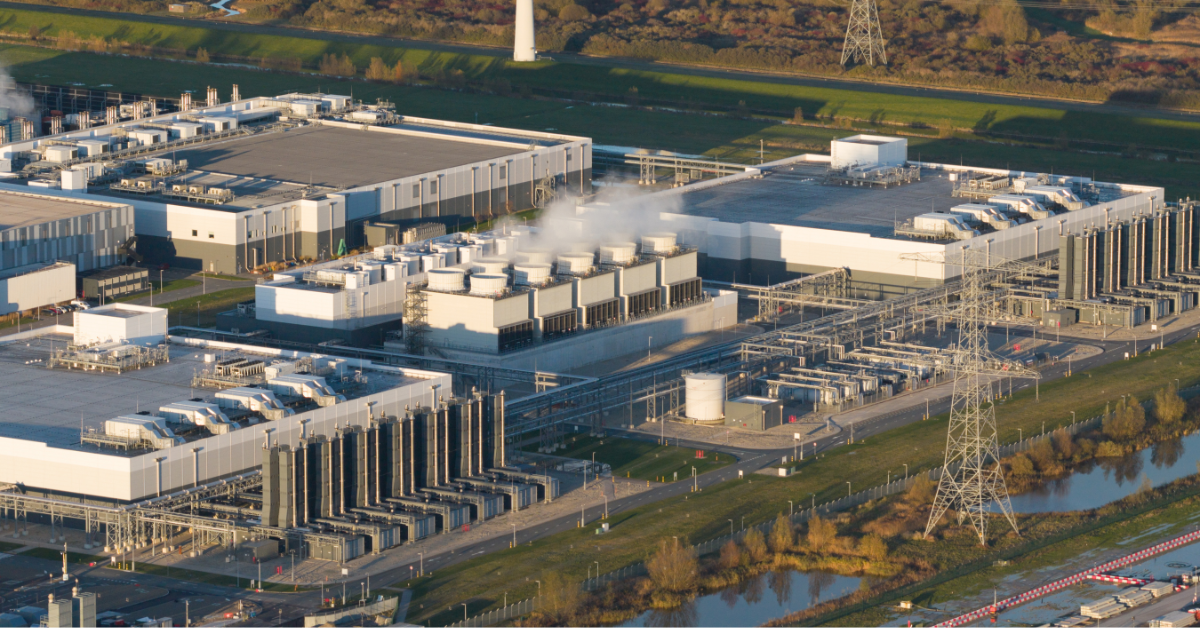
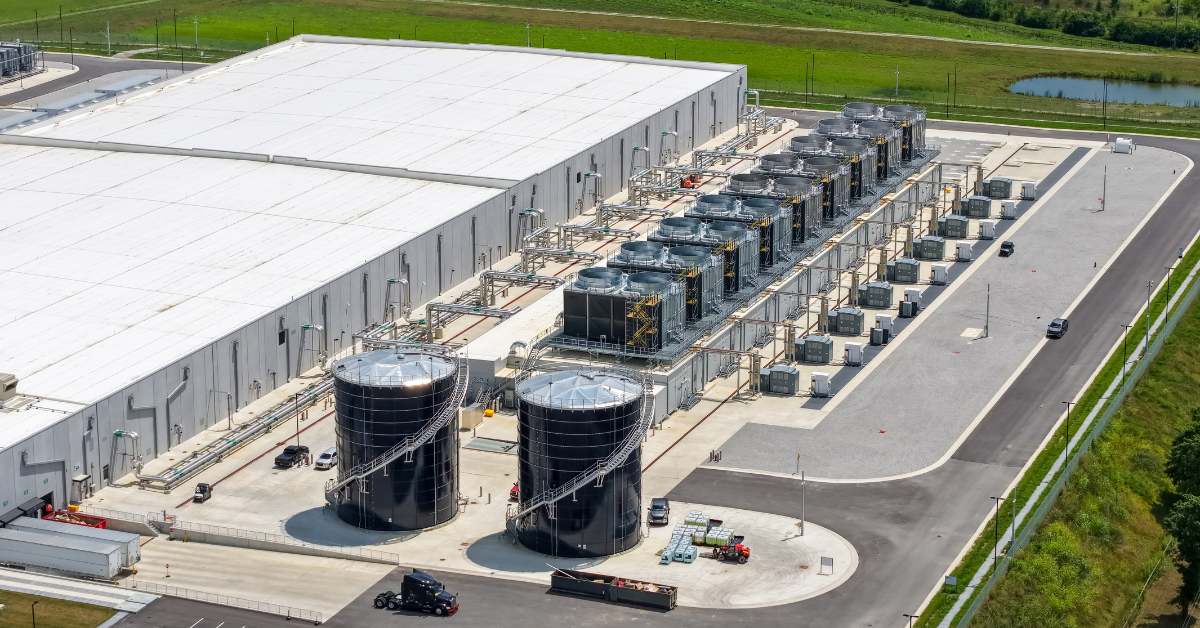
While thermoelectric power plants illustrate how gross withdrawal differs from net consumption, data center cooling systems operate on different proportions. Evaporative cooling towers consume the majority of their intake through evaporation, discharging only a fraction back to local sewers as blowdown. A utility evaluating a data center is underwriting that net consumptive share, not headline withdrawal alone.
What Does a Data Center Water Rights Screen Need to Evaluate?
Five variables are critical to deciding whether a parcel clears the data center water access criterion:
Water Variables in a Data Center Site Screen
|
Variable |
The Question |
Why It Decides the Site |
|
Cooling system design |
Evaporative, closed loop or air cooled? |
Cooling architecture dictates water consumption volume, determining whether local utility or on-site supplies can support the load. |
|
Municipal capacity |
Can the public utility serve peak daily demand without exceeding system headroom? |
Shortfalls may trigger 'will-serve' denials or mandate project-funded storage tanks and treatment plant expansions. |
|
Source water seniority |
How senior is the underlying water right supplying the parcel or utility? |
In prior appropriation states, junior water rights face curtailment during drought calls. |
|
Consumptive use permitting |
Does the project withdrawal exceed the regulatory thresholds? |
Permit timelines sit on the critical path alongside interconnection. |
|
Discharge and blowdown |
Can the local sewer authority or watershed accept the facility's cooling wastewater stream? |
Sewer authorities frequently cap volume, potentially forcing costly retrofits or site rejection. |
Note: The criteria outlined above reflect general benchmarks across North American markets. Because utility service capacities, state water laws, and municipal discharge thresholds vary by jurisdiction, teams should always engage qualified professionals during due diligence.
Cooling design is the lever a developer actually controls, and it sets the data center cooling water requirements for the whole site. The EPA's WaterSense program publishes best management practices for commercial cooling systems, covering cycles of concentration, makeup water and alternative onsite sources. A design change upstream can remove a water constraint that looks fatal on first screen.
How Do Western and Eastern Water Frameworks Differ?
The legal framework governing data center water rights can vary significantly by state.
Western states follow prior appropriation, which is first in time, first in right. Shortages are not shared proportionally. Senior users receive their full allocation first, while newer industrial users holding junior rights can be curtailed entirely during a drought call.
That changes the data center water rights screen entirely. A municipal capacity screen asks whether the system can serve the demand. A data center water rights screen asks whether the ultimate source right is senior enough to survive a curtailment year. A site in a prior appropriation state may have municipal service available from a utility that itself holds junior rights. The utility's commitment to the project is only as reliable as its own supply.
Eastern states operate mainly under riparian frameworks, where use is tied to land ownership rather than to priority date. Regulated riparian systems are often simpler for industrial users in water rich basins. They still impose consumptive use permits, basin level caps and reasonable use restrictions.
Wastewater is handled separately from water supply. Most facilities send cooling blowdown directly into municipal sewers, which enforce EPA pretreatment guidelines on temperature, total dissolved solids, and chemical additives. If a project instead intends to release effluent directly into an adjacent river or stream, it triggers state and federal EPA environmental discharge permits that can add months to the development timeline.
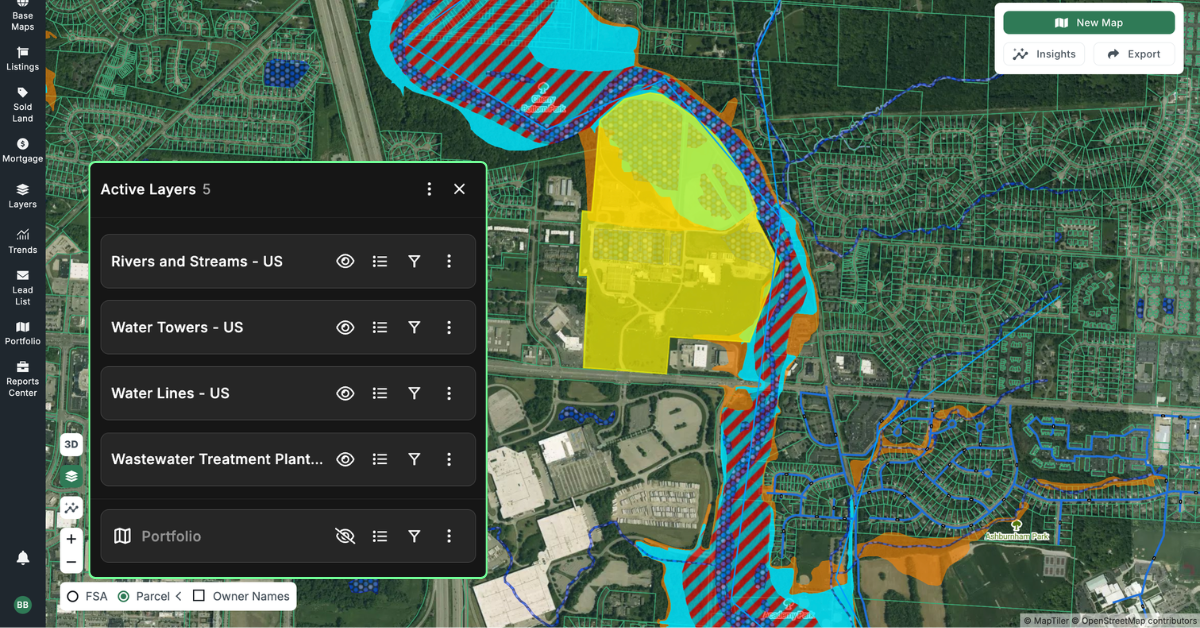
With Acres: Acres surfaces water rights, wells, access, environmental overlays for wetlands and floodplains, and infrastructure proximity signals nationwide. A team running the water criterion can see the parcel context before formal utility engagement begins.
When Should the Water Screen Run in the Sequence?
Water diligence should run in parallel with power and fiber. Consumptive use permits, hydrological studies, and community water impact assessments all run on multi-month timelines. Discovering a water constraint after capital is committed leaves no room to redesign the cooling system or to switch sites.
A practical screen has four steps:
1. Establish the cooling design and its consumption profile.
2. Check municipal capacity and the seniority of the ultimate source.
3. Identify the state consumptive use permit threshold and whether the project crosses it.
4. Assess the local political profile around water use.
Reviewing plat maps and property boundary records belongs in that same early pass. Boundaries and adjacent ownership determine where a wellfield, a pipeline easement, or a discharge route can physically go.
The three point test for data center land shows how water sits alongside power and fiber in one screen.
How Acres Supports Data Center Water Rights Screening
Water screening needs parcel boundaries, environmental overlays, and infrastructure proximity together. Assembling those across separate county and state systems is often what pushes water diligence to the end of the sequence.
Acres gives development teams the most extensive, complete view of land data in a single platform. That covers parcel boundaries, ownership records, zoning, environmental signals including wetlands and floodplains, and infrastructure proximity nationwide.
Say no faster, focus on viable deals, and outpace your competitors.
For teams screening a specific geography, data center site selection data on Acres brings entire parcel level context into one session. Teams ready to run a live screen can request a demo with the Acres team.
Water Is a Primary Screen, Not Just a Confirmatory Step
Run data center water rights screening in the same pass as power and fiber. In the markets where water access is a limiting constraint, a late discovery is one of the most expensive findings a project can make.
The distinction that matters is withdrawal against consumption. In Western states, add source seniority to that question. In Eastern states, add the consumptive use permit threshold. A team that screens water early, using parcel level context before formal utility engagement, can prevent water from becoming an unexpected blocker.
Ready to run the water criterion as a primary screen on your candidate parcels? Review boundaries, environmental overlays and infrastructure context with parcel and environmental risk data on Acres.