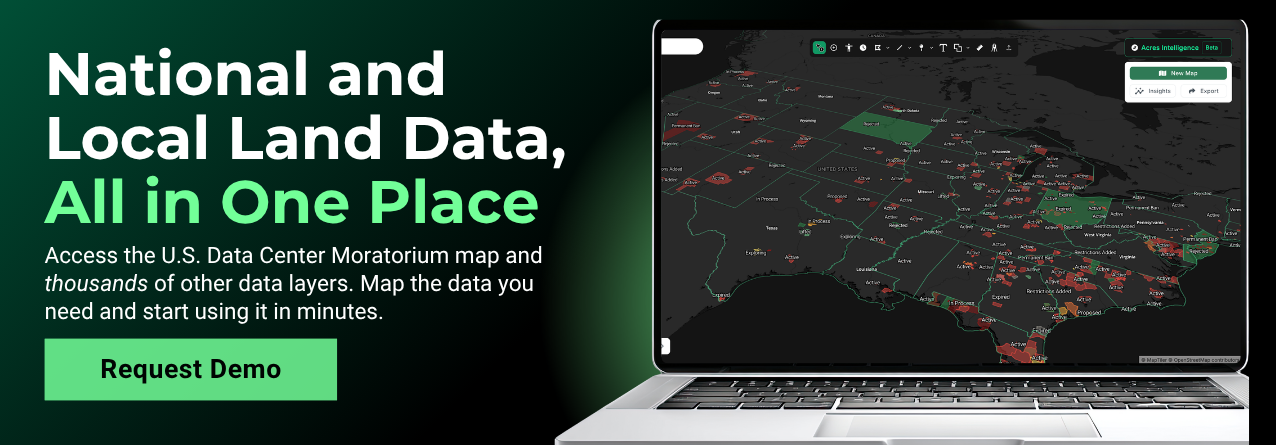


Local governments nationwide are pausing applications, rejecting proposals, and in some cases, banning data centers outright while they rewrite their rules. For site selection and development teams, a moratorium can stop a project at any point—even when time and money have already been spent.
With Acres.com, teams can use the Data Center Moratoriums map layer to see where pauses are active, where they've been rejected or expired, or why they were put in place.
What is a Data Center Moratorium?
A data center moratorium is a temporary pause a city or county places on new data center applications, permits, or construction. While it's in effect, the local government won't accept or approve data center projects.
Communities usually adopt them to buy time. Large data center campuses can place heavy demands on power, water, roads, and land, and many local zoning and land use codes weren't written with hyperscale facilities in mind. A moratorium gives officials room to study those impacts and draft new standards.
Some moratoriums expire on schedule, others are extended repeatedly, replaced with new restrictions, or turned into permanent bans.
How to Track Active Data Center Moratoriums Nationwide
Acres' interactive Data Center Moratoriums Map, available in our Layer Library, outlines every city and county where data center moratorium activity has been recorded, and labels each one with its current status.
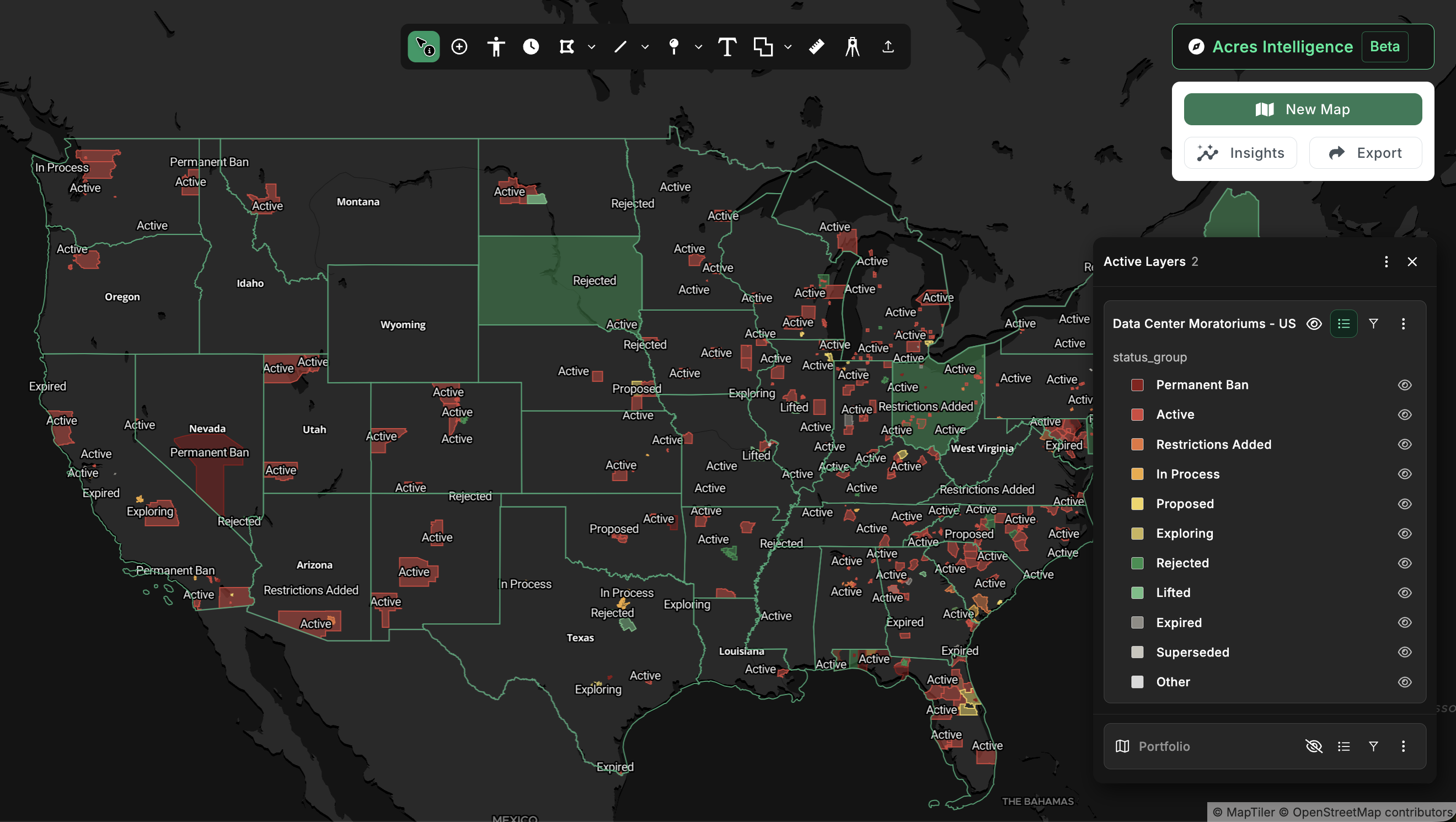
Statuses on the map include:
- Active: A moratorium is currently in effect (shown in red)
- Rejected: A proposed moratorium was voted down (shown in green)
- Expired: A moratorium has reached its end date
- Lifted: A moratorium was ended early
- Permanent Ban: Data centers are prohibited outright
- Restrictions Added: The pause was replaced with new rules or standards
- In Process, Proposed, and Exploring: A moratorium is being drafted, considered, or discussed
Connect with our sales team today to explore this and thousands of other data layers!
What Data Is Included in Each Data Center Moratorium Record?
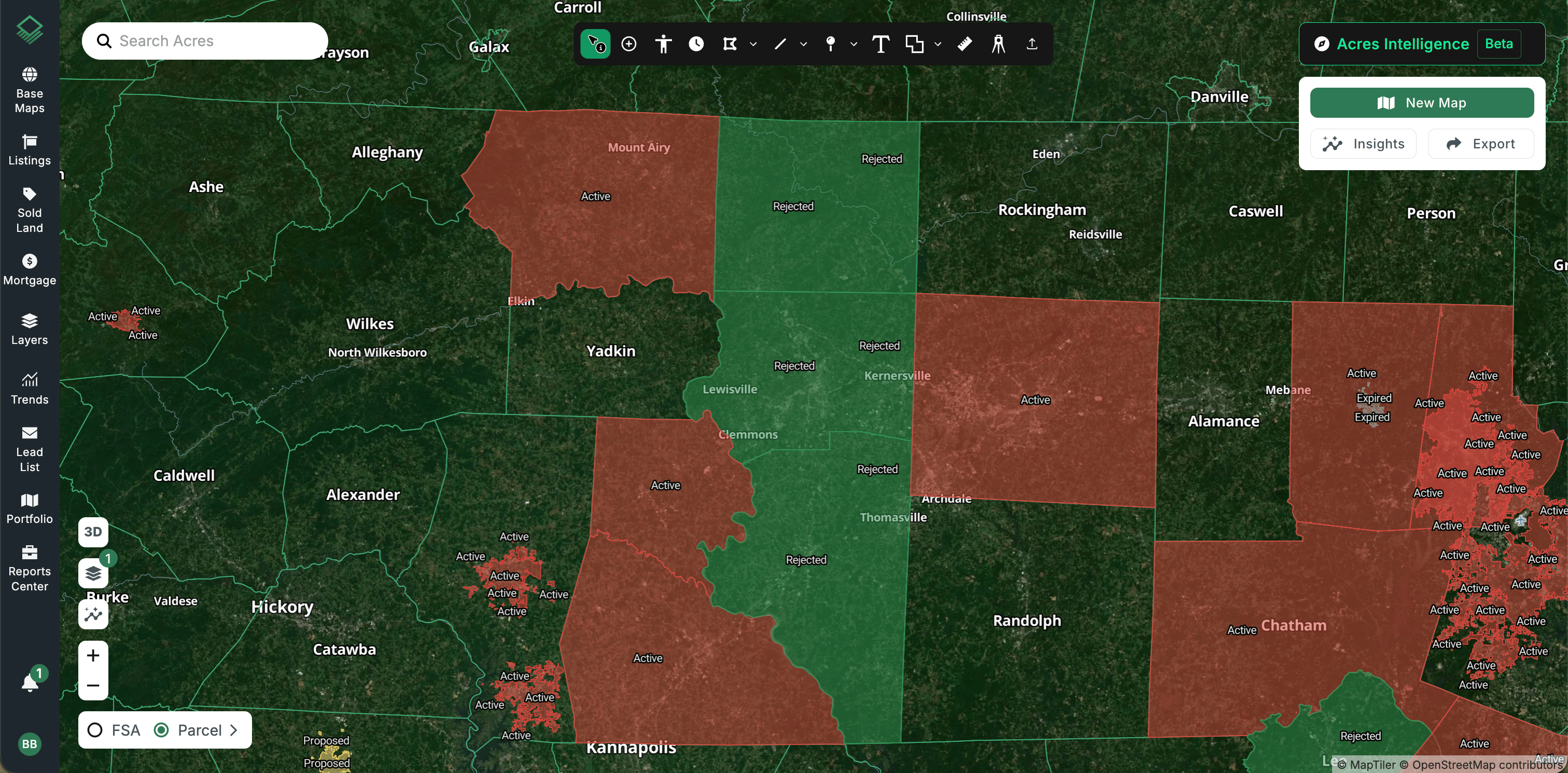
Zoom in to the map and local patterns emerge. In central North Carolina, for example, several neighboring counties have active moratoriums while others nearby have rejected them, revealing how widely opinions can vary from one county line to the next.
Click any outlined area to open its full record. Key fields include:
- Location, county, and state: Where the action took place.
- Level: Whether it was adopted by a city or a county.
- Status: Where the moratorium stands today, from active to rejected to permanent ban.
- Date enacted, duration, and end date: When it started, how long it runs, and how many times it's been extended.
- Reason: Why officials paused development, such as a zoning review or infrastructure study.
- Source and URL: A link to the report or public record where the moratorium was established.
Case Study: Tracking Sedgwick County’s Data Center Moratorium in Kansas
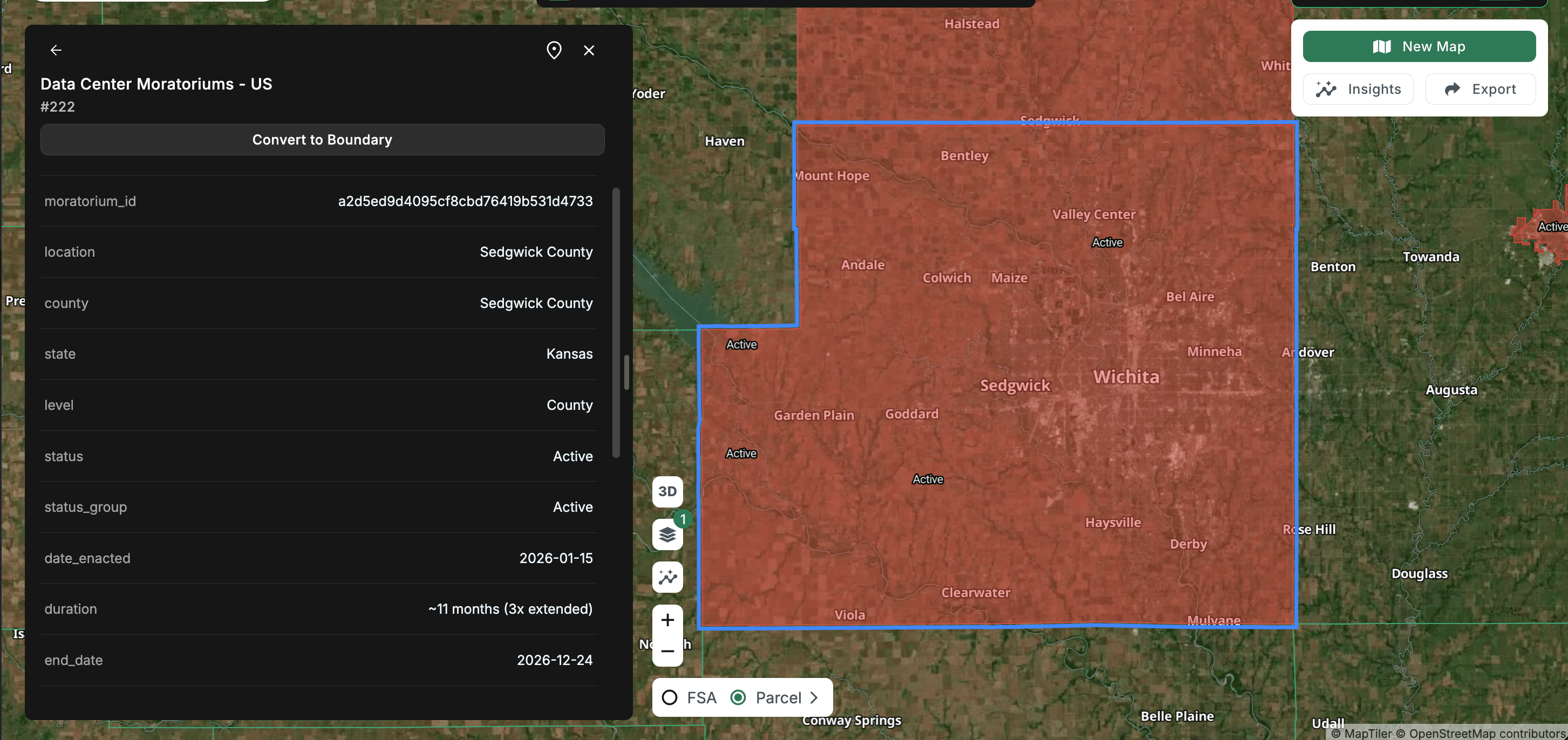
Here's what a record looks like in Sedgwick County:
|
Field |
Value |
|
Location |
Sedgwick County, KS |
|
Level |
County |
|
Status |
Active |
|
Date enacted |
01/15/2026 |
|
Duration |
~11 months (extended 3 times) |
|
End date |
12/24/2026 |
|
Size |
1,000+ acres |
|
Reason |
Zoning regulation review |
|
Vote |
Unanimous |
|
Source |
For developers in south-central Kansas, that's a signal to watch the December end date closely and plan for new zoning requirements once the moratorium lifts. For developers scouting Kansas, it’s a clear sign to avoid this county.
How Moratoriums Impact Data Center Site Selection and Development
Site Selectors and Developers
- Early Screening: A site with strong power, fiber, and water access can still be off the table if the county has paused data center applications. Checking for moratoriums first keeps data center site selection teams from spending months on a site that can't be permitted.
- Timing and Strategy: End dates and extension history help you judge when a market may reopen and how likely that is. Rejected moratoriums can point to communities more open to development.
Energy and Infrastructure Teams
- Grid Planning: Pair moratorium data with substation and transmission line layers to find viable sites that have both power access and a clear permitting path.
- Utility Coordination: Moratoriums tied to power or water studies can signal where local infrastructure is already under strain.
Landowners and Brokers
- Land Value: An active moratorium can temporarily limit data center buyers in an area, while an expired or rejected one may reopen demand. Brokers can use this context when pricing and marketing land.
- Timing a Sale: Knowing when a moratorium ends helps landowners decide when to bring property to market.
Investors and Lenders
- Due Diligence: Checking for active, proposed, or permanent bans is a quick, defensible step in any land development risk review.
- Market Trends: Tracking where moratoriums are spreading helps lenders and investors anticipate regulatory risk across a portfolio.
5 Ways to Use the Data Center Moratoriums Map for Site Selection
- Filter by status: Show only Active moratoriums to see where development is paused today, or add Proposed, In Process, and Exploring to spot where restrictions may be coming next.
- Watch the end dates: A moratorium ending soon may mean an opportunity, or new zoning rules on the way.
- Read the reason: Knowing why a community paused development helps you anticipate what new requirements may look like.
- Go to the source: Open the linked article or record for the full story behind each decision.
- Layer it up: Combine moratorium data with zoning, sentiment data, fiber, substations, and transmission lines for a complete picture of a site.
De-Risk Data Center Site Selection with Recent Moratorium Data
Local moratoriums have become one of the biggest variables in site selection. The Acres Data Center Moratoriums layer puts that information on the map, with status, dates, reasons, and sources, so you can focus on sites with a real path forward.
Explore this and thousands of other data layers in the Acres Layer Library to make confident site selection and investment decisions.
Book a demo to see the Data Center Moratoriums layer in action.